
There is a quiet moment in every hotel stay. It happens just after the door closes and before the suitcase is opened. In that moment, a guest decides whether the room feels intuitive or instructional.
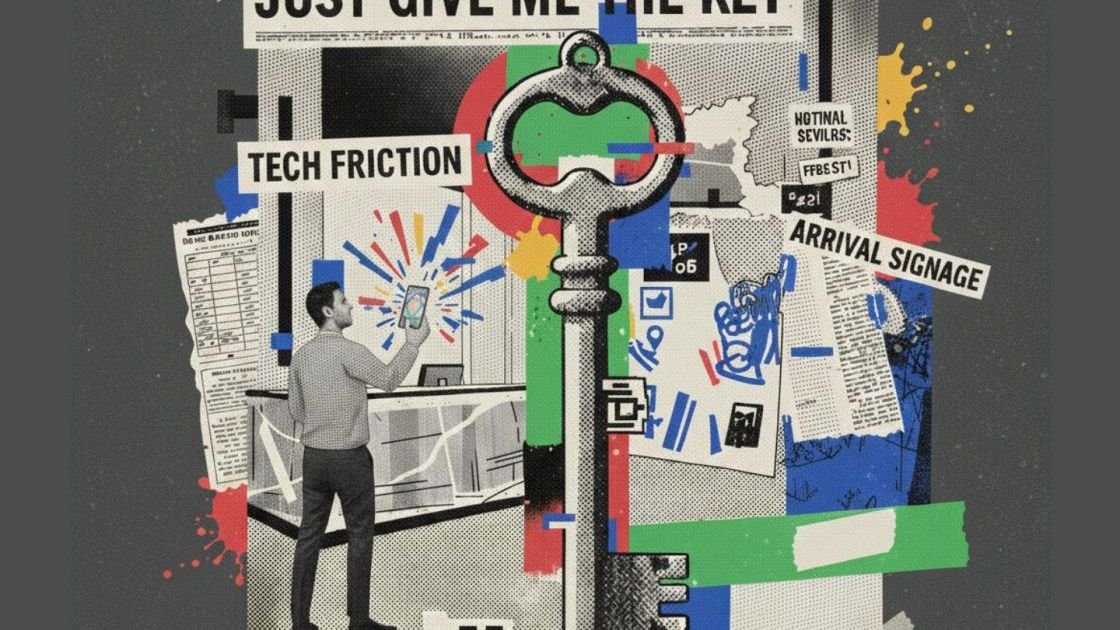
Recently, an article in The Nightly, “Just Give Me a Damn Room Key!”, challenged the assumption that more technology automatically improves the hotel experience. The author suggests that technology, once introduced to simplify the guest experience, now often complicates it. The issue is not technological ambition. It is that technology decisions are sometimes advanced without disciplined oversight.
Hotels are right to embrace technology, evolving alongside shifts in guest behaviour and operational capability. The question is how decisions about what to deploy and for what specific outcome are evaluated. At times, the ambition is clear, but the rationale is not always articulated with the same intent.
Takeaways
Hotel technology decisions require governance, not enthusiasm. Adoption should be tied to clearly defined operational and experiential outcomes.
Cognitive load must be evaluated alongside efficiency. Technology that requires instruction shifts the effort to the guest.
Configurability offers strategic flexibility. Not all segments value digital immersion at the same level.
Behavioural adoption determines real ROI. Usage rates and satisfaction correlation matter more than installation.
Emotional warmth remains a competitive differentiator. Technology should amplify, not overshadow, the human core of hospitality.
The real question behind technology decisions
Most hotels invest in digital systems for legitimate reasons. Labour constraints are real. Guest expectations evolve. Brand positioning requires visible modernity. Moreover, vendors present compelling cases for automation, personalisation, and efficiency.
Cloud-based PMS systems, mobile key integrations, and in-room IoT control platforms are frequently positioned as delivering measurable efficiency and service improvements. They can reduce manual processes, streamline data flows, and create operational transparency. At scale, those benefits are material.
However, hotel technology decisions are increasingly shaped by AI anxiety. When a competitor launches AI-powered guest engagement or revenue optimisation tools, the absence of similar capabilities can appear negligent. As AI narratives accelerate, deployment is framed as inevitable rather than evaluated. In this environment, urgency replaces discipline.
Yet technology does not operate in isolation. Each system changes the emotional temperature of a property. All interfaces add or remove cognitive load. Every automation subtly alters the relationship between staff and guest.
The question, therefore, is not whether to digitise. It is whether each deployment solves a clearly defined problem without creating new friction, operationally or emotionally.
When convenience adds cognitive load
Consider the shift from mechanical light switches to multi-function touch panels. On paper, integrated control panels improve energy management and allow scene setting. In practice, they sometimes require instruction.
Similarly, in-room tablets centralise services, but they also assume digital fluency. Climate systems promise precision, yet guests frequently override them or call reception for assistance. Mobile check-in reduces queues under certain conditions, yet it also transfers part of the arrival ritual onto a screen.
These examples do not prove that technology fails. Rather, they illustrate a common oversight in hotel technology decisions: friction is rarely measured as rigorously as adoption.
If a guest must learn how to use the room, the effort has shifted from staff to traveller. Hotels are emotional environments, not software platforms. Guests arrive tired, time-pressured, or unfamiliar with the setting. Clarity is not a luxury. It is a reassurance.
Therefore, the evaluation framework should expand. Beyond installation and integration, executives must ask:
-
What specific friction does this remove?
-
What new friction might it introduce?
-
How will we measure behavioural adoption?
-
Does this improve emotional comfort or merely operational optics?
Without these questions, innovation risks becoming performative rather than purposeful.
From universal deployment to configurable hospitality
The most compelling insight from the referenced article was not nostalgia for brass keys. It was the suggestion of choice. The author proposed three check-in pathways: “Blissfully Analogue,” “Digitally Enhanced,” and “Confoundingly Futuristic.”
There is something there that resonates, and it isn’t the first time the idea has surfaced.
Rather than imposing a single digital journey, hotels could treat technology as configurable infrastructure. Not every guest wants the same level of digital touch. Not every segment values the same experience. A business traveller arriving at midnight may prioritise speed and autonomy. A resort guest beginning a week-long stay may value a human welcome and sensory ease.
So what would a more intentional approach actually look like?
Blissfully Analogue
Human check-in remains central. Physical keys or simple keycards are standard. Lighting and climate controls are manual and intuitive. Apps are optional rather than required.
This pathway may appeal to leisure travellers, luxury guests, and experience-driven segments who prioritise warmth and ease over experimentation. It does not reject technology; it simply keeps it invisible.
Digitally Enhanced
AI-powered guest messaging and recommendation systems may support service delivery, while traditional communication channels remain equally accessible. Smart room features can automate comfort settings, yet manual controls remain intuitive and visible. Technology enhances efficiency without redefining the relationship between guest and staff.
Business travellers and repeat guests often prefer this balance. Efficiency matters, but so does reliability. Technology supports service rather than substituting it.
Confoundingly Futuristic
Biometric access, voice control, and robotic service become the defining features. Automation is not hidden; it is part of the brand proposition.
In certain urban or short-stay contexts, this differentiation may resonate strongly. Here, digital immersion becomes part of the experience narrative.
By structuring hotel technology decisions around configurable pathways, properties can match deployment to segment strategy and brand identity. Technology becomes adaptive rather than universal.
CitizenM pioneered a model where technology adapts to the hotel’s environment and guest behaviour, not the other way around.
The operational discipline behind smarter decisions
Of course, configurability introduces complexity. Brand standards, legacy infrastructure, vendor bundling, and integration constraints can limit flexibility. Capital expenditure must be justified against measurable returns. Staffing models may shift as automation increases.
However, taking the time to evaluate properly ultimately makes the investment easier to defend.
For example, executives can track:
-
Mobile key adoption rates versus total arrivals
-
Correlation between digital feature usage and guest satisfaction scores
-
Labour hours saved per occupied room
-
Service recovery times in automated versus human-led interactions
-
Energy consumption patterns before and after IoT deployment
When hotel technology decisions are tied to measurable operational and experiential outcomes, confidence increases. Conversely, when ROI is assumed rather than tested, scepticism grows.
Importantly, behavioural adoption must precede financial validation. If only a minority of guests use a feature, its strategic role should be reconsidered or repositioned. Installation is not endorsement.
What this means for hotel leaders
If innovation itself is not the problem, then governance must become the priority.
The first step is deceptively simple: define the constraint before selecting the solution. Technology should respond to measurable operational friction, documented guest dissatisfaction, or clear segment demand. Without a defined trigger, deployment risks becoming symbolic rather than strategic.
Second, separate operational technology from experiential technology. A PMS migration, revenue optimisation engine, or energy management system can be evaluated through productivity and cost metrics. An in-room tablet, biometric check-in, or robotic concierge must be evaluated differently. These systems affect perception, not just performance. They influence emotional temperature as much as efficiency.
Third, installation is a milestone; adoption is a verdict. Usage should be evaluated against outcomes, not volume alone. Does engagement correlate with higher satisfaction, faster resolution, or improved loyalty? Equally important is avoidance. When guests bypass a feature or revert to traditional channels, that signal is instructive.
Technology that requires persuasion may not be solving a meaningful problem.
Fourth, preserve manual overrides. Physical keycards, intuitive light switches, and human arrival rituals are not regressions. They are safeguards. Redundancy lowers anxiety and protects warmth. In hospitality, psychological reassurance carries operational weight.
Finally, align digital depth with brand identity. A luxury resort built on intimacy and sensory immersion may not benefit from maximal automation. A high-density urban property may. Technology should express the brand, not overwrite it.
Preserving emotional warmth in a digital environment
The heart of this debate is not hardware or software. It is hospitality.
Guests do not enter a hotel as blank slates. They arrive mid-journey, between commitments, time zones, or obligations. What feels like innovation on paper can feel like effort in practice.
Technology should therefore operate invisibly wherever possible. When it works seamlessly, it amplifies service and reduces anxiety. When it becomes visible and instructional, it competes with it.
Hotel technology decisions must account for this emotional dimension. Efficiency gains are meaningful, but so is perceived warmth. Automation can coexist with human service, yet it should not displace it indiscriminately or symbolically.
The challenge is not to slow innovation. It is to calibrate it with intention and restraint.
Conclusion
The article that sparked this reflection was deliberately candid. Its frustration was understandable. However, the more productive response is not resistance. It is refinement.
Hotel technology decisions should move from reactive adoption to intentional design. Instead of asking, “What is the market installing?” leaders might ask, “What problem are we solving for this guest segment, in this property, at this moment, and how will we know if we succeeded?”
Technology is not eroding hospitality. Poorly governed deployment is. When digital systems are selected with precision, integrated thoughtfully, measured rigorously, and offered with choice, they enhance rather than dilute the experience.
In the end, the goal is simple. Guests should never feel as though they are operating the hotel. The hotel should operate quietly and intelligently for them.