
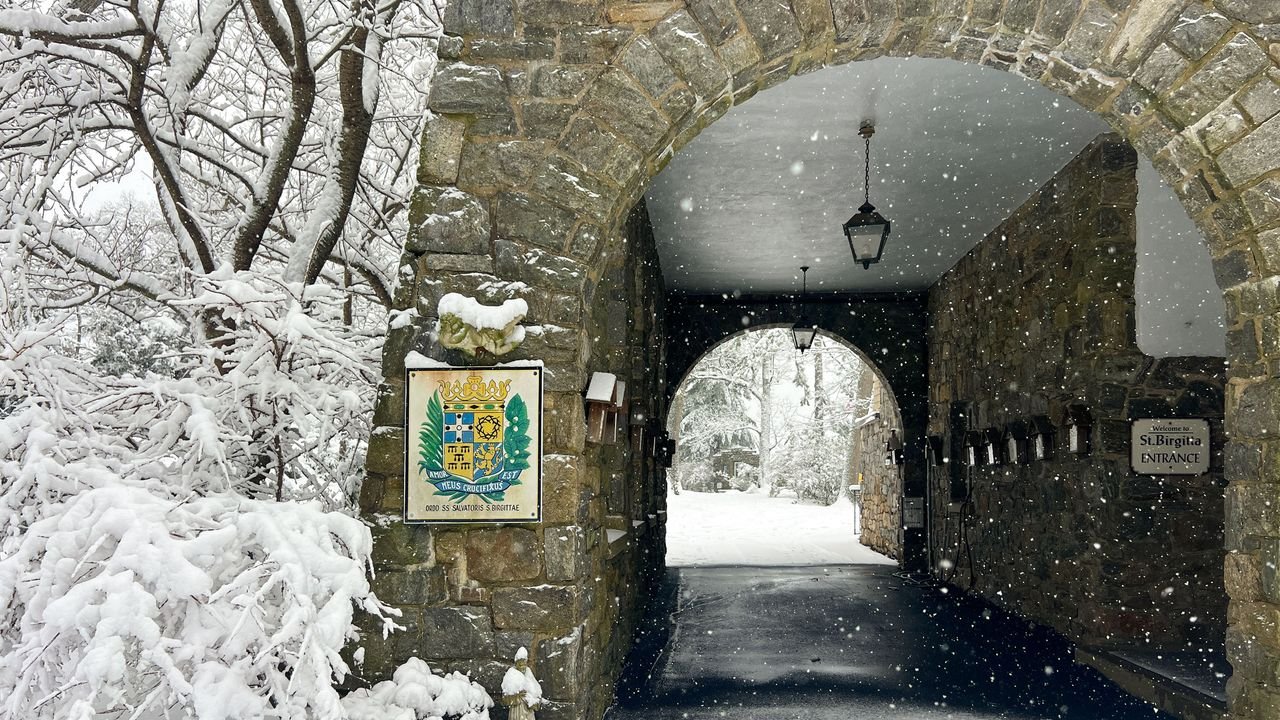
The Darien location is one of 58 Bridgettine convents in 19 countries around the world, and the order’s only guest house in the United States that is available to book for overnight stays. All the European convents—including the mother house in Rome and lesser-known locations in Estonia, Finland, and Switzerland—similarly open their doors to weary travelers searching for respite, a unique vocation that has earned the Bridgettines the nickname “the order of hospitality.”
Charging just $150 a night for a room and three meals a day, Vikingsborg has become a popular seaside retreat among in-the-know artists, writers, and neighbors in search of quiet. But as one guest is quick to tell me, “this isn’t a Hilton.”

Instead, the convent’s nine bookable guest rooms are more akin to sleeping over at your grandmother’s house, swaddling you in a familiar, matronly feeling of being watched over and cared for from a distance. Antique wooden dressers are laden with lace doilies, and in most corners, you’ll find floral upholstered armchairs deep enough to tuck in your knees. In the main foyer, crystal chandeliers twinkle with the reflection of a nine-foot-tall Christmas tree. Porcelain angels and long red candlesticks adorn a small brick fireplace that’s been painted green.
“People find great comfort and peace and welcome here that you don’t get someplace else,” says Lynn, a frequent guest from a nearby town, who asked to be identified by her first name only. “But it’s not for everybody either.”
I grew up in Norwalk, less than 10 minutes away, but had never heard of the convent until one summer in high school, when my dad paddled across the river to their private dock and returned home with tales of lunching with the nuns. When I arrive at the Darien train station, over a decade has passed since my dad’s initial visit, but very little has changed from what he described.
My cab driver recognizes the convent’s address in Tokeneke, a picturesque, and extremely wealthy, corner of town. “It’s very peaceful there,” he tells me, and says that he feels more calm just by driving through the front gates. “They are good people,” he adds. “And good cooks too.”

As we make our way past the gate and down a long winding driveway, I can smell that we are nearing the water. By the entrance, I lock eyes with a stone sculpture of St. Christopher, the patron saint of travelers, standing guard atop a large boulder creeping with moss. In his arms, a baby Jesus with mysteriously mature eye bags flashes a peace sign.
Already, I feel myself settling into the unhurried quiet of winter in Connecticut, a suburban hibernation that once made me seethe with boredom. But with my default response to “how are you?” having somehow now become “busy,” as if that itself was an emotion or feeling, I recently found myself craving these sleepy grey days with nothing to do and nowhere to be.
Through the glass-paned door, I watch a small woman in a black habit swish down the staircase. Her name is Sister Sebastian, she tells me as I follow her inside, one of the six Bridgettine nuns who live together in a smaller house on premise. While my days here are spent blissfully idle, theirs are intensely scheduled: Each day, they devote six to seven hours to daily prayer, the first beginning at 6:10 a.m., while intermittently completing various, equally demanding hospitality tasks—from Costco grocery runs and preparing guest meals to weed whacking the impeccably manicured lawn.