
I’m chowing down on a mini King Cake, my breakfast. It’s a braided cinnamon Danish sprinkled with purple, green, and gold edible glitter, with a cream cheese filling and a little plastic baby perched astride. The baby represents the infant Jesus and is said to bring luck (and an obligation to host the next fête, if he shows up in your slice.)
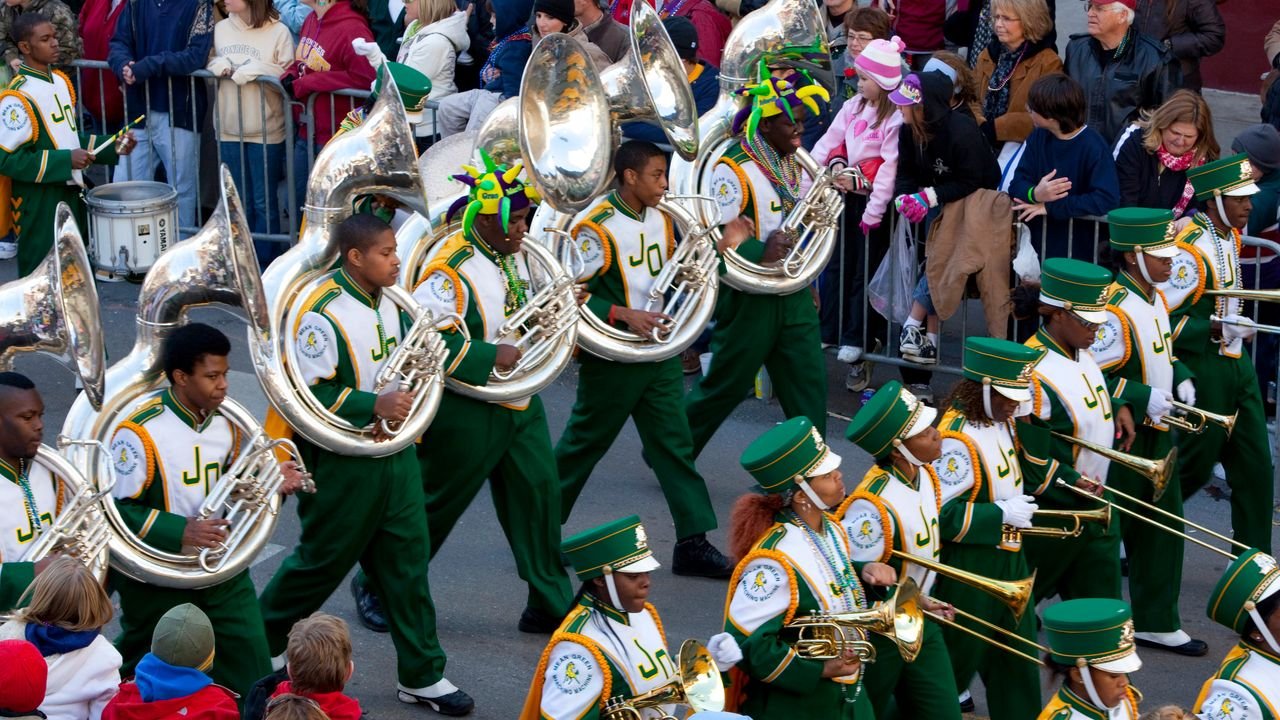
King Cakes—which are first served on King’s Day, January 6, and consumed throughout the Carnival season up until Mardi Gras on February 17—are typically associated with New Orleans. I’m not there, but rather in Mobile, Alabama, the city that actually lays claim to the oldest Mardi Gras celebration in the United States. That party happened in 1703, 15 years before New Orleans was established. While my journey begins in the Big Easy, that’s not my destination. I’ll be riding the rails to Mobile on a newly-returned Amtrak route.

In August 2025, Amtrak revived its Mardi Gras Service, connecting New Orleans and Mobile –the first time the train has run since Hurricane Katrina decimated the Gulf coast in 2005. “Amtrak Mardi Gras Service is a natural choice for the name of the new trains that will reflect the region’s distinctive culture,” says Amtrak President Roger Harris. “Travel should be about more than just getting somewhere. Our goal is to have some of that festive Mardi Gras feeling on every trip, sharing the culture of the Gulf Coast region while connecting with the rest of the Amtrak network.”
When I ride the route, it’s mid-January and Carnival season is just starting to unfold. I begin my journey in New Orleans—it’s easier to get a direct flight there from most parts of the country, though that may change when the new Mobile International Airport opens in fall 2026. Travelers departing from New Orleans have two daily departure options: 7:35 a.m. and 5:31 p.m. Were it summer, I might have opted for a sunset ride; but in January, it’s still fully dark by 5:30, and I have no intention of missing the views, so I’m taking the early train.

The Amtrak route between Mobile, Alabama and New Orleans returns this August after a 20-year hiatus—and tickets start at just $15.
On the day of my journey, the conductor tells me just sixteen passengers have boarded the train from New Orleans. “It’s not usually this quiet,” he says, adding that weekends tend to be busiest, and that this quiet Monday morning was likely a post-holiday lull.
Compared to the behemoth Acela, which hustles hundreds of thousands of riders between Boston, New York City, and Washington DC each month, Amtrak’s Mardi Gras line is downright petite—just two 58-seat coaches, plus a café car and a 14-seat Business Class car. A third coach car has been added for the Mardi Gras season, Amtrak says.
Already, the evening train tends to have a party vibe, according to the conductor—and I’m betting that the closer Mardi Gras draws, the merriment on the rails will only grow. But today, I have plenty of room to sprawl, and I settle into one of the blue vinyl seats, which still has traces of new-car smell.
While you can drive from New Orleans to Mobile in about two hours, the train journey takes just under four, giving plenty of time to watch the landscape unfurl. Practitioners of slow travel will understand: booking this particular train is about leisure and ease, not speed. The sun is still newly up in the east—meaning the right side of the train is a bit bright as the sun lingers low on the horizon–but there are no bad seats in terms of watching the view roll by. Leaving New Orleans, we pass the expansive First Baptist church graveyard, and some homes decked out in green and purple finery. That gives way to palm trees, kudzu, dilapidated brick buildings, a billboard for Big Easy Mayonnaise, followed by the Folgers New Orleans plant—which reminds me I desperately need caffeine.